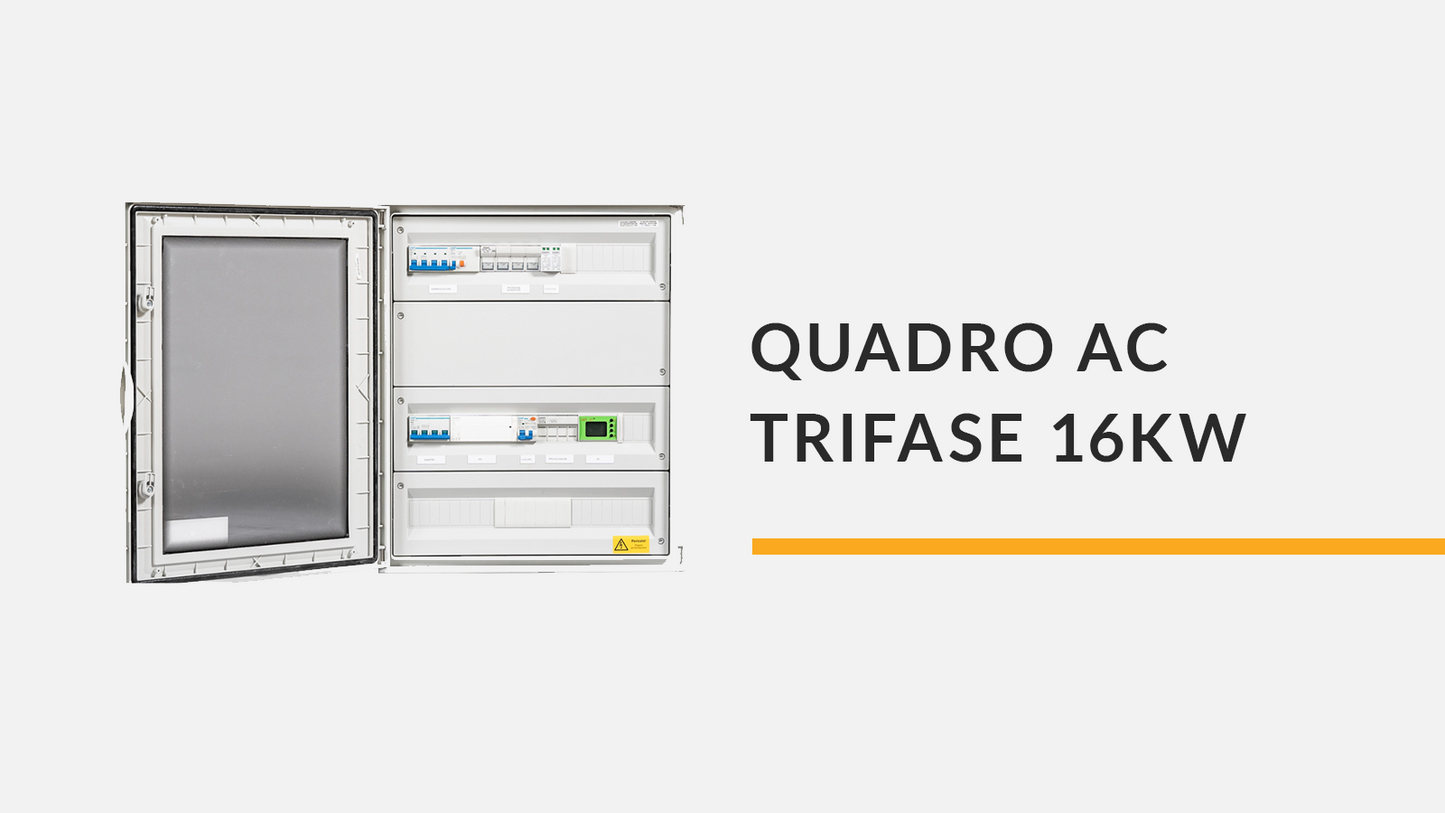
Three-phase AC panel with RCD - 2 x 8.0 kW Inverters (total 16 kW)
Three-phase AC panel with RCD - 2 x 8.0 kW Inverters (total 16 kW)
*VAT excluded.
**SHIPPING EXCLUDED
16 kW Three-Phase Photovoltaic AC Panel with SPI and CEI 0-21 Interface Device for 2 x 8 kW Inverters
The 16 kW three-phase photovoltaic AC panel with an interface protection system (SPI) and a CEI 0-21 compliant interface device is an electrical panel designed for the management, protection, and control of the alternating current (AC) side in residential and commercial photovoltaic systems connected to the low-voltage electrical grid.
The electrical panel is configured to manage two 8 kW three-phase photovoltaic inverters, for a total system power of 16 kW. It incorporates electrical protection, isolation, and control systems designed to ensure the correct coordination of protections between the inverters, electrical lines, and distribution grid.
This AC panel for photovoltaic systems allows the safe connection of the inverters to the electrical grid, ensuring compliance with the technical requirements set out in the CEI 0-21 standard for connecting power generation systems to the low-voltage distribution grid.
Function of the AC Panel in Photovoltaic Systems
The photovoltaic AC electrical panel represents the interface between the photovoltaic inverters and the electrical grid. Its main function is to manage the alternating current side of the system, ensuring electrical safety, operational continuity, and component protection.
The interface protection system (SPI) constantly monitors electrical grid parameters such as:
- grid voltage
- frequency
- phase imbalances
- line operating conditions
In the event of anomalies or values outside the limits set by the connection standards, the system automatically disconnects the photovoltaic system from the electrical grid, preventing possible damage to the inverters and ensuring the safety of the electrical system.
Main Features of the 16 kW Photovoltaic AC Panel
- AC-side management of two 8 kW three-phase photovoltaic inverters
- Total photovoltaic system power up to 16 kW
- SPI interface protection system compliant with the CEI 0-21 standard
- 40 A four-pole main isolator
- AC-3 four-pole contactor with 230 VAC low-voltage coil
- Class II SPD surge arrester for overvoltage protection
- Three-phase miniature circuit breakers for inverter line protection
- Class A four-pole residual current protection devices
- Wall-mounted enclosure with IP65 protection rating
Applications of the Three-Phase Photovoltaic AC Panel
- Medium-power residential photovoltaic systems
- Commercial photovoltaic systems on production buildings
- Photovoltaic installations on residential or small business roofs
- Systems with two three-phase inverters connected in parallel
- Photovoltaic systems connected to the low-voltage grid according to CEI 0-21
- Renewable energy electricity generation systems
Components Included in the AC Electrical Panel
- 1 ABS wall-mounted enclosure with IP65 protection rating
- 1 40 A four-pole main isolator
- 1 40 A four-pole AC-3 contactor with 230 VAC low-voltage coil
- 1 CEI 0-21 compliant SPI interface protection device
- Fuse holder with corresponding protection fuses
- 2 16 A 6 kA 3P+N Type C miniature circuit breakers
- 2 300 mA Class A four-pole residual current protection devices
- 1 3P+N Class II surge arrester
Technical Specifications of the Photovoltaic AC Panel
| Panel Type | Three-phase photovoltaic AC electrical panel with SPI interface protection |
|---|---|
| Inverter Configuration | 2 x 8 kW three-phase inverters |
| Rated System Power | 16 kW |
| Connection Standard | CEI 0-21 |
| Protection Rating | IP65 |
| Overvoltage Protection | Class II 3P+N SPD |
| Installation | Wall-mounted |
Installation of the AC Electrical Panel for Photovoltaic Systems
The AC electrical panel is designed for wall-mounted installation in technical rooms, electrical rooms, or spaces dedicated to the management of photovoltaic systems.
The ABS enclosure with an IP65 protection rating ensures effective protection of the electrical components against dust, moisture, and weather conditions, allowing installation even in outdoor environments.
The sizing and configuration of the panel must be verified by the photovoltaic system designer or a qualified electrical installer based on the system power and the requirements of the distribution grid operator.
Frequently Asked Questions about the Photovoltaic AC Panel
What is the SPI system in photovoltaic systems?
The interface protection system (SPI) is a device that monitors electrical grid parameters such as voltage and frequency and automatically disconnects the photovoltaic system when abnormal conditions or values outside the limits set by the standard are detected.
For which systems is this AC panel designed?
The panel is designed for photovoltaic systems with two 8 kW three-phase inverters, for a total power of 16 kW, connected to the low-voltage electrical grid.
What does the CEI 0-21 standard establish?
The CEI 0-21 standard defines the technical rules for connecting electricity generation systems to the low-voltage distribution grid, establishing the safety, protection, and management requirements for the interface between the system and the grid.
Related Search Terms
16 kW photovoltaic AC panel, three-phase photovoltaic electrical panel with SPI, CEI 0-21 interface protection panel, 8 kW three-phase inverter AC panel, 16 kW photovoltaic system electrical panel, photovoltaic inverter parallel panel, renewable energy generation electrical panel
Couldn't load pickup availability
Important notes: Shipping and order handling costs are not included and will be communicated later during the quoting phase. These costs are due regardless of the chosen delivery method, including pickup at the premises.
Product prices may vary depending on availability and supplier terms at the time of the quote request. Images are for illustrative purposes only and may not accurately reflect the actual product; descriptions may contain errors. We recommend always checking the manufacturer's technical data sheet.
Share